
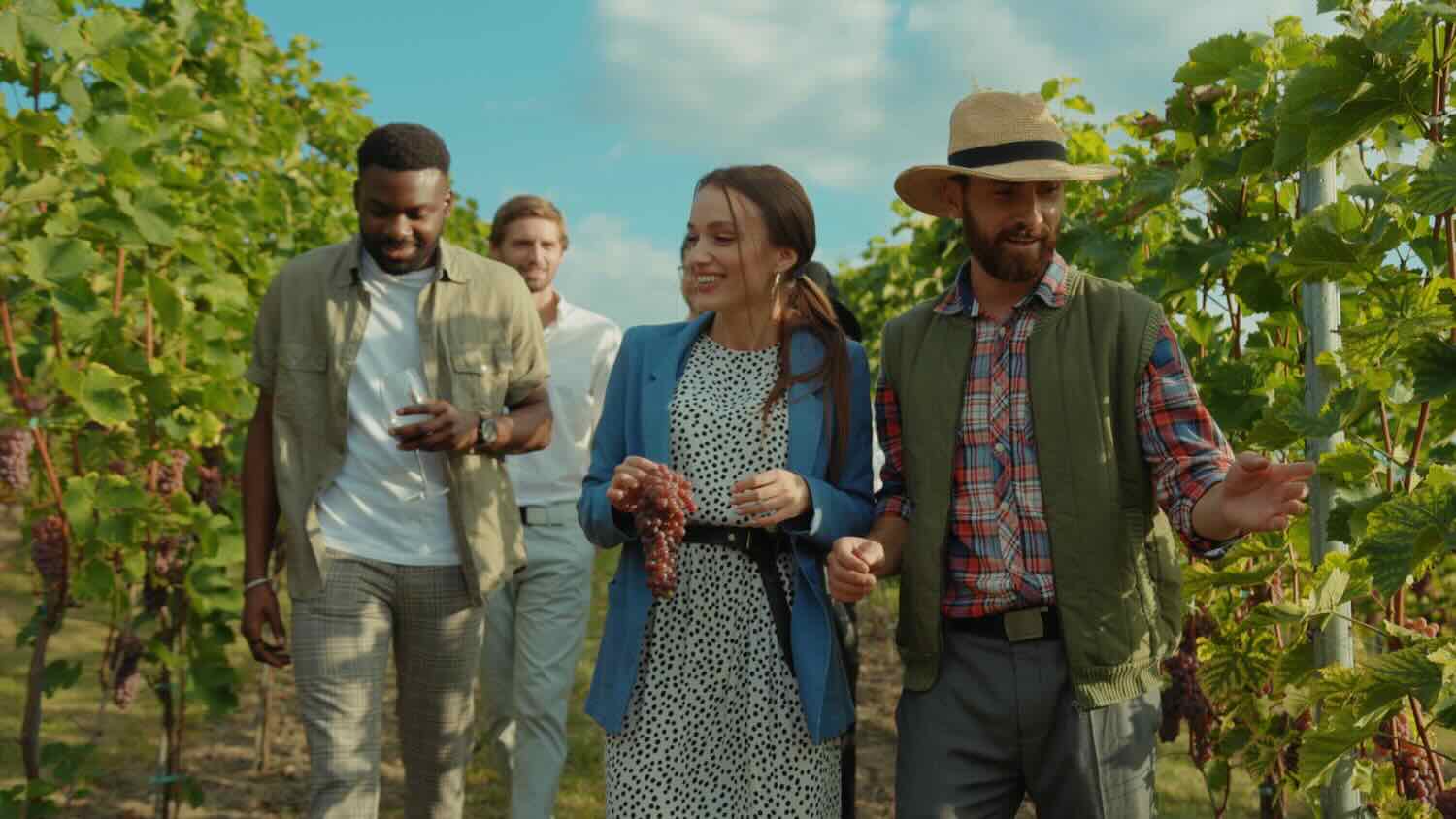
You don’t need to know the difference between a Cabernet and a Chardonnay to have a great day in Napa Valley. Honestly, knowing less might work in your favor. Nobody’s handing you a vocabulary quiz. You don’t have to pretend you’re picking up “notes of blackberry and oak” in something that, to you, just tastes like wine, and a pretty good one at that.
You’re there to enjoy yourself, plain and simple. The valley is gorgeous, the food is legitimately excellent, and the wineries are worth the trip whether or not this is your first tasting ever.
You Don’t Need to Be an Expert Here
Most first-timers get stuck on one worry: not knowing what to say once the pouring starts. Forget that. Wine hosts deal with beginners all day long, probably more often than they deal with people who actually know what “tannic” means. Tell them what you normally drink and let them take it from there.
Maybe you like sweet things. Maybe you go light. Maybe wine isn’t even really your drink, and you’re usually reaching for a beer or a cocktail. Any of that is plenty to get a conversation going.
Or just say it straight: “I don’t really know wine, what would you pour for me?” Nobody’s going to think less of you for asking.
Figure Out What You Like as You Go
Don’t bother memorizing wine terms before the trip. It’s not going to help much, and half of it won’t stick anyway. Think instead about flavors you already gravitate toward in everyday life.
If you like fruity drinks, you’ll probably like wines with a lot of fruit up front. If you go for something crisp and easy to drink, a white might suit you better. If bold and heavy is more your speed, try a full-bodied red.
You genuinely don’t need to walk in already knowing the answer. Working it out over the course of the day is arguably the best part.
You Don’t Have to Drink Everything You’re Poured
A tasting isn’t a challenge where you have to like every glass in front of you. If something’s not for you, just say so, or don’t finish it. Nobody’s counting.
You’re there to figure out what actually works for your palate, not to perform enthusiasm for six wines in a row. Slow down and pay attention to how each one lands. One might smell incredible and then taste way too strong. Another might catch you completely off guard, in a good way. Both reactions are useful information, and by your second or third stop you’ll start noticing what you keep gravitating toward.
Ask Questions. Seriously, All of Them
Talk to the person pouring. Ask why this wine tastes so different from the last one. Ask what they’d serve it with. Ask what tends to be popular with people who don’t drink much wine to begin with.
Even something basic like “what’s actually different about this one?” usually gets a real, thoughtful answer instead of a brush-off. These little back-and-forths teach you far more than you’d expect, and none of it feels like sitting through a lecture.
Pick Wineries for the Whole Experience, Not Just the Bottle
If knowing wine isn’t the point of your trip, don’t chase a winery just because it’s famous. Think of the bigger picture.
Some places have views over the whole valley that alone are worth the stop. Others lean into old architecture, gardens, or a tasting room you’d want to sit in even without a glass in hand. More often than not, you’ll remember the setting just as vividly as anything you drank there.
A relaxed spot with a good view will usually beat somewhere stiff and formal, especially for a first visit.
Don’t Rush It
Skip the temptation to cram five or six wineries into one day just because you technically could. Two or three is genuinely plenty.
Give yourself time to sit, take in the scenery, and actually notice what’s in your glass instead of rushing to the next stop. Leave room for a proper lunch and some wandering in between. The whole day works better when you’re not glancing at your watch every twenty minutes.
Food Can Make Wine Click
If a wine tastes confusing all on its own, try it next to food. Pair it with cheese, or fruit, or a dish at a restaurant, and it can taste like an entirely different drink.
That’s a big part of why food-and-wine pairings work so well for beginners. Instead of wondering if you “get” the wine, you’re just noticing which combinations you enjoy together. And honestly, if food ends up being the real reason you loved the trip and wine was secondary, that’s completely fine. Napa Valley delivers plenty on the food side alone.
There’s a Lot to Do Outside the Tasting Room
This trip doesn’t have to be wall-to-wall wine. Take a scenic drive through the hills. Wander around Yountville or St. Helena for an afternoon. Sit down for a long, unhurried lunch. Book a spa treatment. Take a few photos of the vineyards at golden hour.
If whoever you’re traveling with actually knows wine, you can still have a full, great day without turning it into your own crash course alongside them. There’s plenty beyond the tasting room to keep you occupied.
What Should You Actually Wear?
Nothing fancy is required. Smart casual works well for most of the day, especially if you’re bouncing between wineries and restaurants.
Comfortable shoes matter more than people think going in, since you’ll likely end up walking through vineyards or uneven ground at some point. Napa weather also tends to shift over the course of a day, so a light extra layer is worth packing. The goal is really just to stay comfortable enough that you’re not distracted from actually enjoying yourself.
Don’t Feel Bad About What You Don’t Know
This might be the single most useful thing in this whole list.
Wine can feel intimidating simply because there’s so much language and tradition built up around it. But nobody was born knowing any of it. Your first trip to Napa isn’t a test you can fail. You don’t need to correctly name every flavor in the glass or explain the history of a grape variety to anyone.
All you actually need to do is taste, ask questions, and pay attention to what you enjoy. If you walk away knowing you like one particular style better than the rest, you’ve already learned something real and useful.
Let the Valley Surprise You
You might show up convinced you know absolutely nothing about wine. That’s fine, truly. By the time the day wraps up, you might find a wine you genuinely love, pick up a handful of things along the way, and understand a little better why people keep coming back to this part of California.
Or maybe you’ll leave and decide wine just isn’t your thing. That’s fine too, and it’s not a failed trip. You still get the vineyards, the food, the scenery, and the small towns, wine enthusiast or not.
Napa Valley was never only built for people who already know what they’re doing. Show up curious, ask whatever’s on your mind, taste what actually interests you, and let the day move at whatever pace feels right.